Reservation Culture
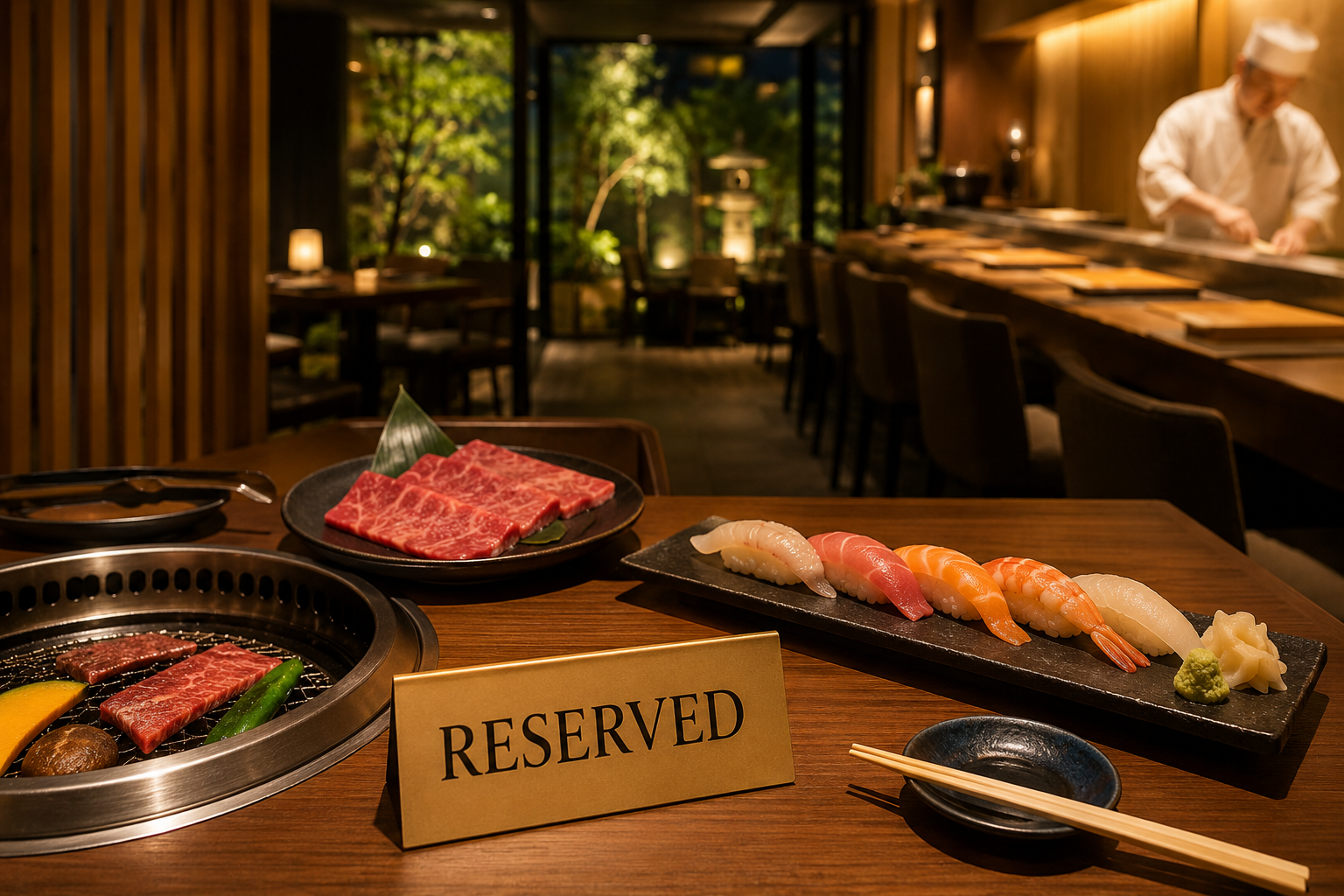
Making reservations weeks in advance is the norm for popular restaurants (especially yakiniku and sushi). However, please be aware that penalty fees apply for cancellations made the day before. *Depending on the restaurant and party size, these fees may apply up to a week in advance. *Also, when checking the Japanese calendar, note that reservations may already be full on Fridays, Saturdays, the days before public holidays, and during long holiday weekends.
In Japan, making "advance reservations" for popular restaurants is highly common. It is not unusual for famous yakiniku or sushi restaurants, as well as dining spots with great views, to be fully booked weeks in advance. During tourist seasons and weekends, many places are difficult to walk into on the same day, so if you have a specific restaurant in mind, early booking is recommended.
Furthermore, there is a strong cultural understanding in Japan that "a reservation is an important promise to secure a seat," meaning no-shows and last-minute cancellations are taken very seriously. Many establishments may charge a cancellation fee (penalty) for cancellations made on the day of or the day prior. Additionally, depending on the venue and the size of your group, you might be required to pay a cancellation fee starting about a week in advance, so it is essential to check the rules when making your reservation.
Moreover, places tend to be exceptionally crowded on Japanese public holidays, long holiday weekends, and Friday and Saturday nights, sometimes reaching full capacity at a very early stage. Checking the Japanese calendar and holiday information before your trip will help you plan your itinerary more smoothly.
By preparing well in advance, you will be able to enjoy Japan's uniquely wonderful food culture much more comfortably.