Introducing the history and origins, correct eating methods, and unique eating methods
of Japanese food that has achieved unique evolution,
as well as recipes at home and mail ordering.
◆ Classic / Standard Japanese Food(The Classics)
If you are interested in Japan, you must have heard of these.
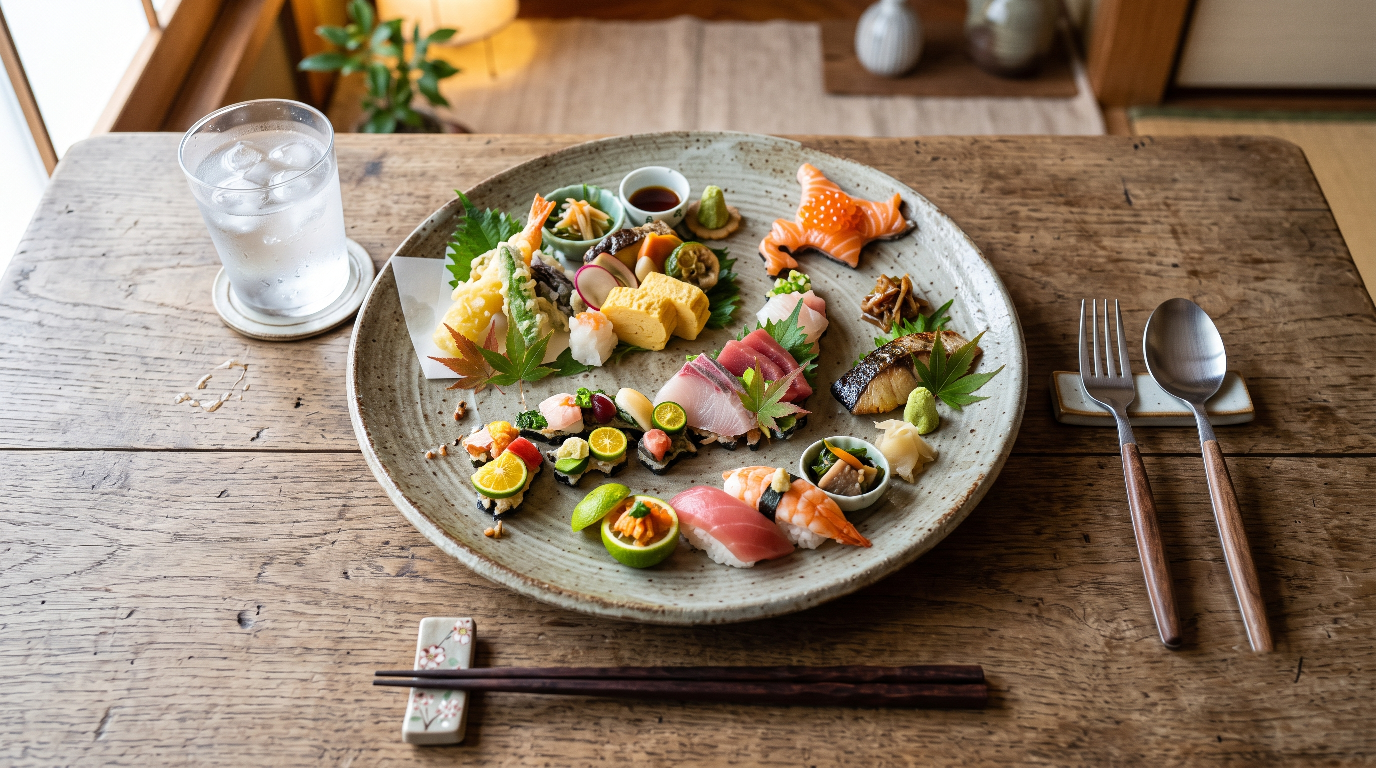
Sushi(Sushi):By hands or chopsticks, the correct way to apply soy sauce, the origins of Edomae sushi Ramen(Ramen):The culture of slurping noodles, types of soup and regionality Tempura(Tempura):The history of introduction from Portugal, proper use of tempura dip (tentsuyu) and salt Sukiyaki(Sukiyaki):Introduction to the culture of eating with raw egg, civilization and enlightenment and the history of eating beef Sashimi(Sashimi):The role of wasabi, types of fish and the concept of seasonality
◆ Noodles(Noodles)
Besides ramen, Japanese noodles are abundant, and each has its own food culture.
Udon(Udon):The concept of chewiness (koshi), regional differences in broth (dashi) Soba(Soba):How to enjoy soba water (sobayu), the culture of New Year's Eve soba Yakisoba(Yakisoba):Food stall culture, history of the sauce Somen(Somen):The entertainment nature of flowing somen (nagashi somen), a summer tradition
◆ B-grade Gourmet / Street Food(Street & Casual Food)
It is popular as a casual snack while walking during trips, and it is a menu with high demand for recipes that can be made at home.
Takoyaki(Takoyaki):How to make it using a takoyaki maker, Osaka's flour food culture Okonomiyaki(Okonomiyaki):The difference between Hiroshima style and Kansai style, how to cut it on a hot plate Yakitori(Yakitori):How to choose between salt and sauce, manners of eating without removing from the skewer Onigiri(Onigiri):How to open convenience store onigiri, samurai history as portable food Karaage(Karaage):Characteristics of Japanese fried chicken, manners when squeezing lemon
◆ Japanese-style Western Food / Daily Food(Comfort Food & Yoshoku)
Menus introduced from the West and uniquely evolved in Japan have backgrounds that themselves become interesting content.
Curry Rice(Japanese Curry):History of introduction from the British Navy and unique evolution Tonkatsu(Tonkatsu):The experience of grinding sesame seeds in a mortar, arrangement into katsu curry Omurice(Omurice):The technique of wrapping with egg, connection with pop culture such as maid cafes Gyoza(Gyoza):The unique Japanese style of pan-fried gyoza, the golden ratio for the dipping sauce Gyudon(Gyudon):History as fast food, customization with red pickled ginger and shichimi (seven-flavor chili pepper) Korokke(Korokke):Transformation from French croquette to deli food, eating-while-walking culture
◆ Traditional Food / Experiential Menu(Traditional & Unique Experience)
These are menus where the eating process itself becomes an activity, or where you can feel Japanese spirituality.
Shabu-shabu(Shabu-shabu):The number of seconds to dip the meat in hot water, manners of skimming the scum Unagi Kabayaki(Unagi Kabayaki):The custom of the Midsummer Day of the Ox, differences in cooking methods between Kanto and Kansai Wagyu / Yakiniku(Wagyu / Yakiniku):Characteristics of branded beef such as Matsusaka beef, explanation of cuts and how to grill Oden(Oden):Winter food stalls and convenience store culture, how to use mustard Chawanmushi(Chawanmushi):How to use a spoon, the gap between the pudding-like appearance and broth Natto(Natto):Health benefits as a fermented food, the delicious number of times to mix and toppings Miso Soup(Miso Soup):How to hold the bowl and drink, the basics of one soup and three dishes
◆ Japanese Sweets(Japanese Sweets)
A genre of high interest as an after-meal dessert or souvenir.
Mochi / Daifuku(Mochi / Daifuku):The relationship between New Year's and mochi, a warning not to choke on it Matcha Sweets(Matcha Sweets):Development from the history of the tea ceremony to modern ice cream and parfaits Dorayaki(Dorayaki):Connection with anime characters (Doraemon), history of red bean paste
kakigori(Kakigori): History from the Heian period (Himuro), Japanese shaving technique that creates a fluffy texture, and seasonal fruit sauce
Warabimochi (Warabi mochi): Rarity of bracken starch and unique texture, culture of gifts that evoke a sense of "coolness" and are appreciated as souvenirs